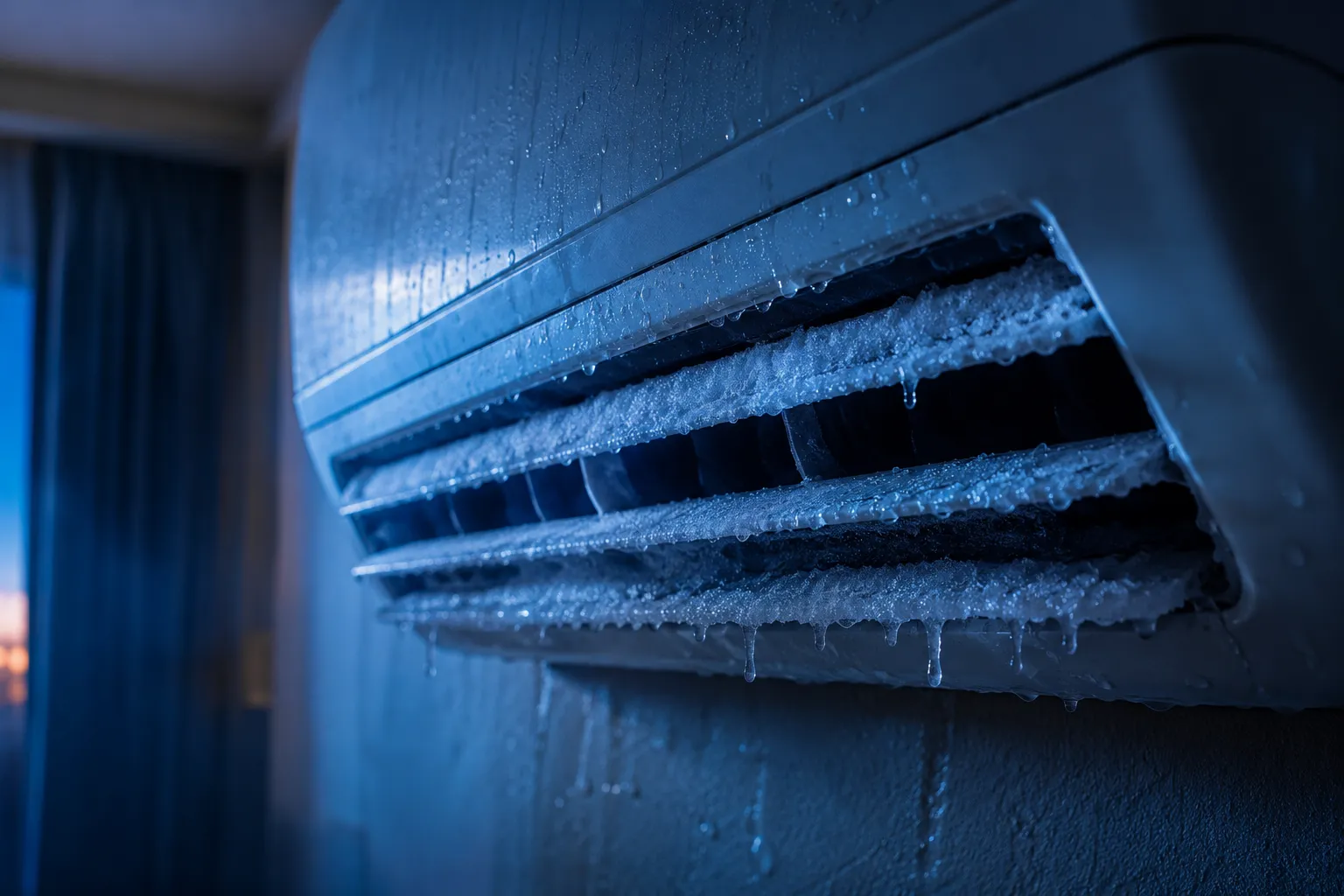
In Malaysia, aircond is often the single largest contributor to the household electricity bill — accounting for up to 50% of monthly consumption in homes that run units through the night. When the TNB bill comes in high, the aircond is usually the first suspect. The good news is that most of the savings don't require buying new equipment.
Set the Temperature at 24–25°C, Not 16°C
Many people set their remote to the lowest possible temperature thinking the room will cool faster. It doesn't — the unit cools at the same rate regardless of the set temperature. What changes is how long it runs before shutting off. At 16°C in a Malaysian home, most units run almost continuously because the target temperature is never realistically achieved.
The sweet spot in Malaysia is 24–25°C. At this setting, the room reaches a comfortable temperature and the unit cycles off and on normally. The compressor runs far less frequently, and your electricity consumption drops meaningfully. A common estimate: every 1°C you raise your set temperature reduces energy consumption by approximately 6–8%. Moving from 18°C to 24°C represents a very significant saving.
Set your temperature to 24–25°C. Every 1°C increase reduces electricity consumption by approximately 6–8%.
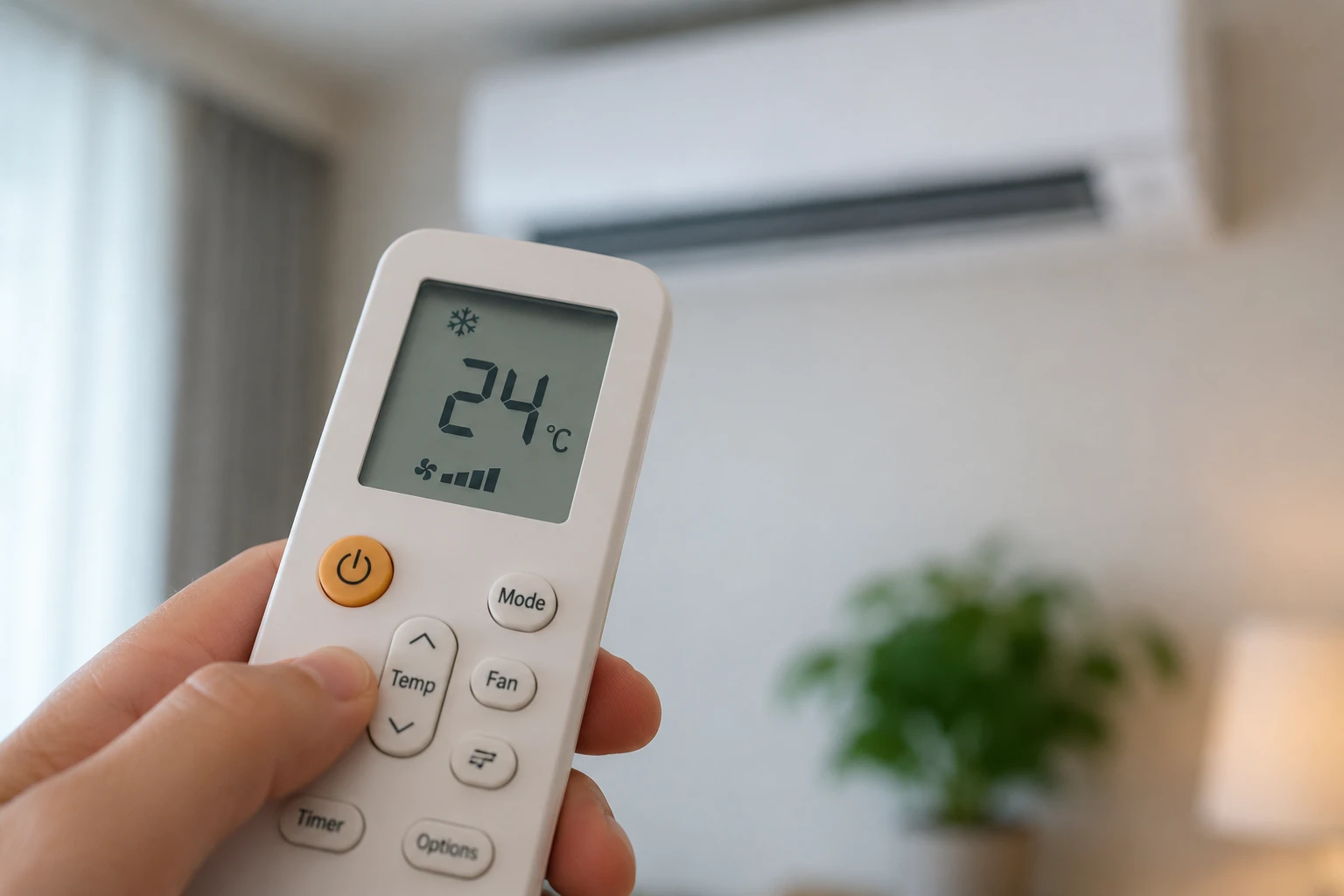
Setting your remote to 24–25°C is the single highest-impact change for most Malaysian homes.
Use the Timer — Stop Cooling an Empty Room
Aircond doesn't need to run all night while you're in deep sleep in an already-cool room. Most people sleep comfortably once the room has reached a comfortable temperature, and body heat under a blanket maintains that comfort even after the unit switches off. Set the timer to switch off 2–3 hours after you go to sleep. If you wake up warm in the early hours, turn it back on — you'll still use less electricity than running it continuously for 8 hours.
For offices and workplaces, ensure units are switched off during lunch, after office hours, and over weekends. It's extremely common for commercial aircond to run through empty buildings simply because no one made it a habit to switch off.
Keep Doors and Windows Closed While the Aircond Is Running
Cooling a room works by removing heat from a contained space. If doors or windows are open, you're constantly pulling in warm, humid outdoor air and the unit works harder to compensate. This is especially relevant in Malaysian shophouses and terrace homes where the kitchen is open-plan. Close the doors to the room being cooled.
The same principle applies to ceiling gaps and visible cracks around window frames — cool air escapes, warm air replaces it, and the aircond runs more. This costs nothing to fix as a habit.
Service Your Aircon Regularly
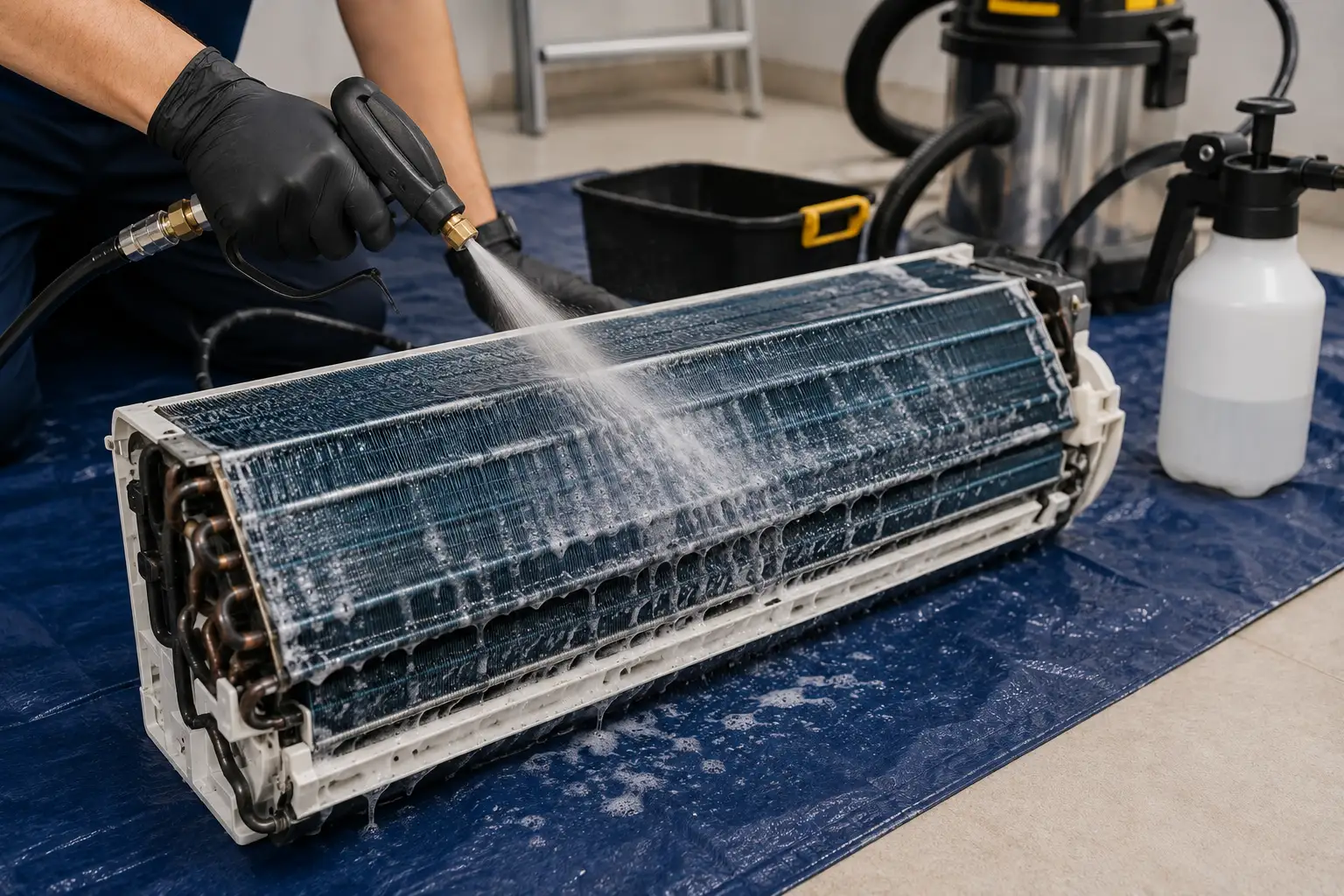
A dirty air filter and grimy evaporator coil force the unit to work harder to achieve the same cooling output. Studies and field measurements in tropical climates consistently show that a poorly maintained aircond unit can consume 10–25% more electricity than a clean one performing the same cooling task.
Regular servicing — every 3 months for daily use — keeps the airflow unobstructed, the coils clean, and the refrigerant at the right level. The cost of a service (typically RM 60–120) is almost always recovered in electricity savings within the same billing cycle for a unit that was previously neglected. Think of it this way: a dirty aircond is like a car engine running with a clogged air filter — it burns more fuel to produce the same output.
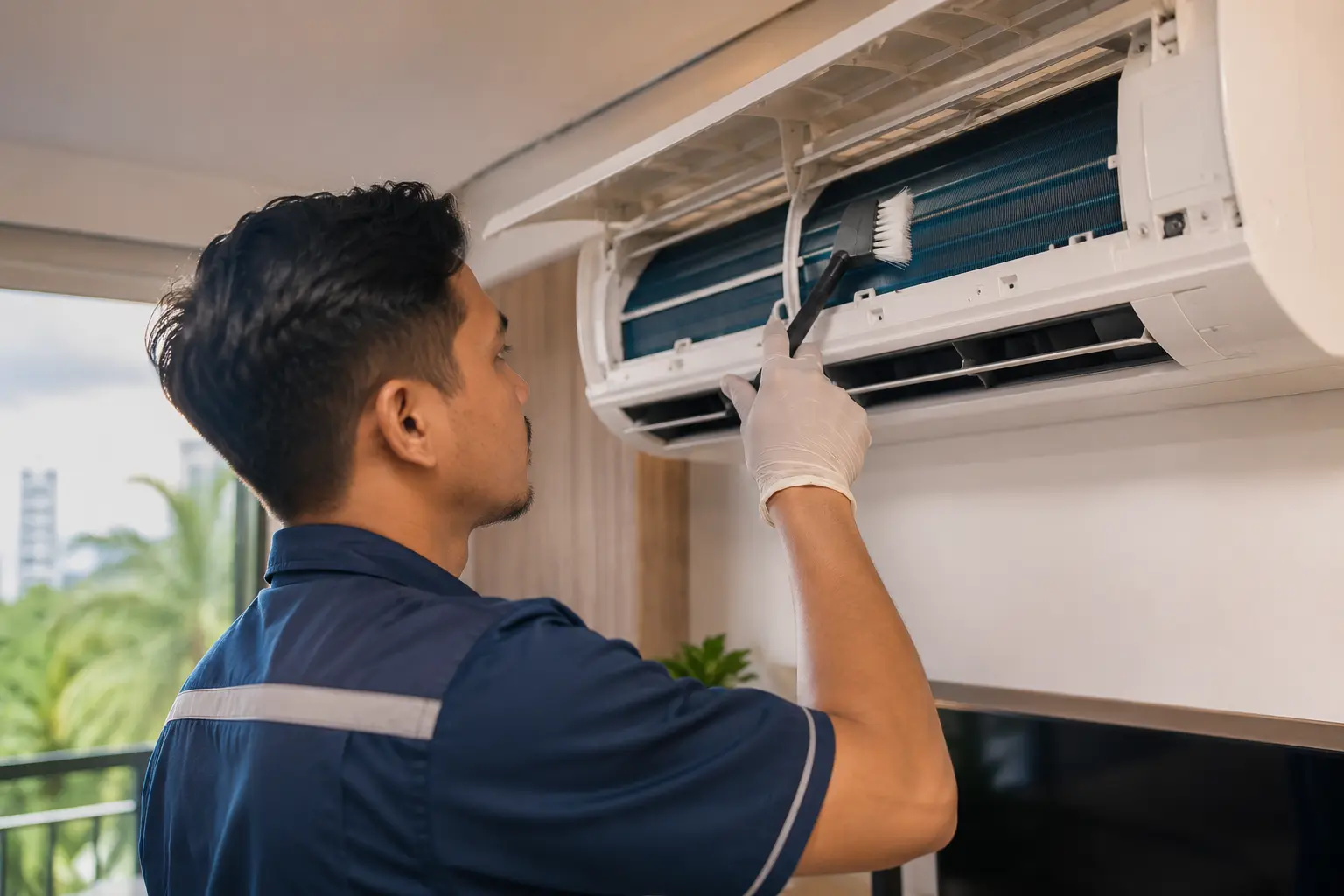
A clean evaporator coil can reduce electricity consumption by 10–25% compared to a clogged one.
Consider Switching to an Inverter Unit (When Replacing)
If your existing unit is more than 8–10 years old and you're already thinking about replacing it, an inverter model is worth the higher upfront cost.
Non-inverter aircond works like an on/off switch — the compressor runs at full power until the set temperature is reached, then shuts off completely, then starts up again. This start-stop cycle is electrically expensive. Inverter aircond modulates the compressor speed: it starts, reaches the target temperature, and then slows down to maintain it rather than switching off entirely. Running at reduced speed uses far less electricity than repeated start-stop cycles.
In Malaysian conditions — long daily run times and high ambient temperatures — inverter units typically save 30–50% on electricity compared to an equivalent non-inverter model. The payback period on the price premium is generally 2–4 years for daily users. This isn't advice to replace a functioning unit prematurely — but if your unit is old and repair costs are mounting, switching to an inverter model at replacement time is a sound financial decision.
The Honest Summary
You don't need to do all five at once. Start with the temperature setting and the timer — those two changes alone will be visible on your next TNB bill.
| Tip | Effort Required | Expected Impact |
|---|---|---|
| Set temp to 24–25°C | Zero cost, 10 seconds | High |
| Use the timer | Zero cost, 1 minute to set | Medium–High |
| Keep doors/windows closed | Habit change only | Medium |
| Regular servicing | RM 60–120 every 3 months | Medium–High |
| Upgrade to inverter (on replacement) | Higher upfront cost | High (long-term) |
If your aircond hasn't been serviced in a while and your electricity bill has been creeping up, that's often the connection.
WhatsApp Alphamatic